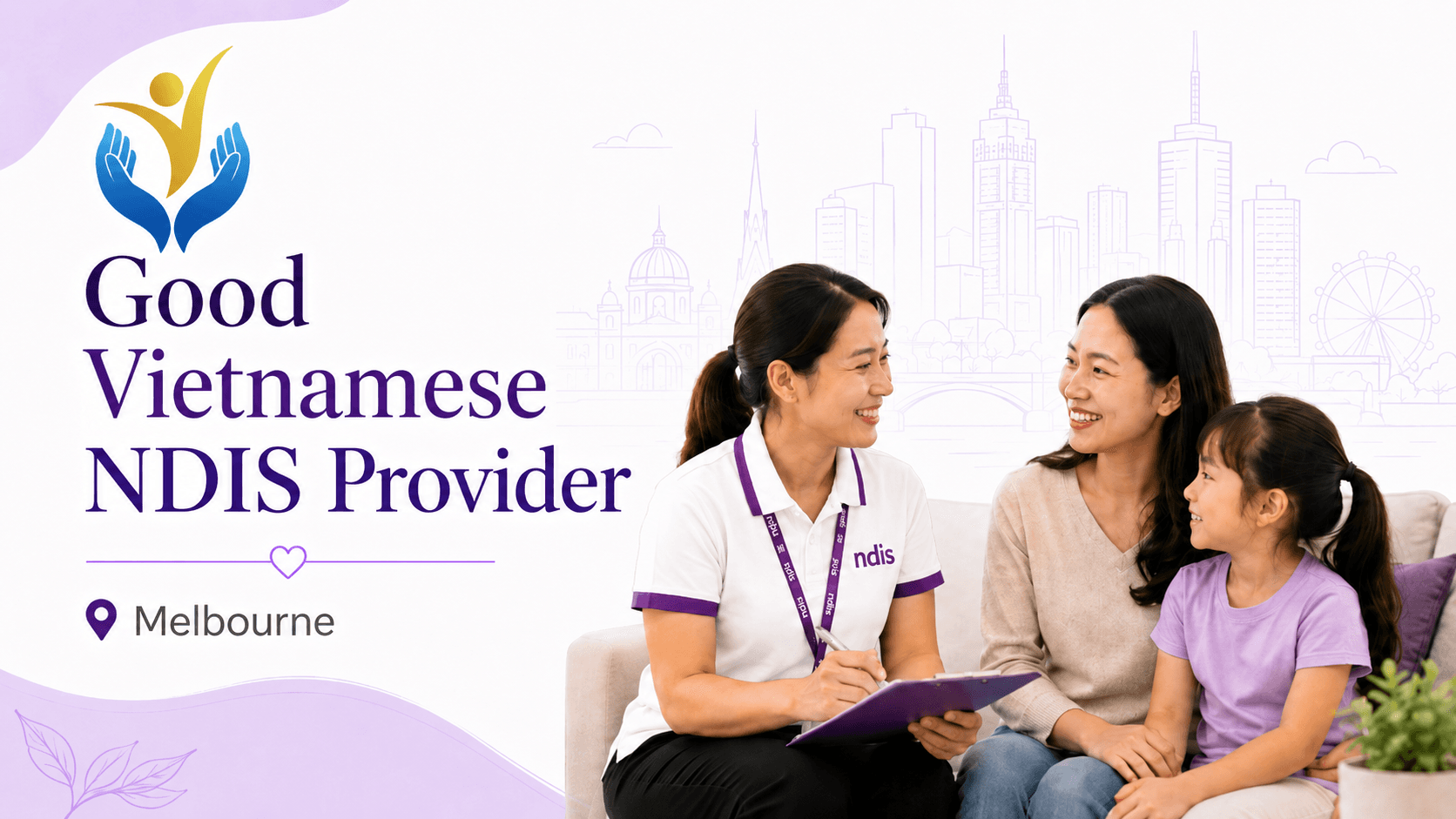
Finding the right NDIS provider can feel overwhelming, especially for Vietnamese families who may need support in their own language and someone who understands their cultural background. A good NDIS provider is not only someone who can deliver services, but also someone who listens, explains things clearly, respects the family’s values, and helps the participant build confidence and independence.
For Vietnamese and CALD families in Melbourne, choosing an NDIS provider who understands both the NDIS system and the family’s cultural needs can make a big difference.
Why Vietnamese-speaking NDIS support matters
Many families find the NDIS difficult to understand, especially when English is not their first language. Service agreements, funding categories, support plans, therapy goals and progress reports can all feel confusing.
A Vietnamese-speaking NDIS provider can help families:
- Understand their NDIS plan more clearly
- Communicate their concerns in Vietnamese or English
- Explain the participant’s needs in a culturally sensitive way
- Support parents and carers to make informed decisions
- Reduce misunderstandings between families, providers and Support Coordinators
- Help participants feel more comfortable during services
For children, adults and older participants from Vietnamese backgrounds, having a support team who understands their language, family structure and cultural expectations can create a safer and more comfortable support experience.
What makes a good Vietnamese NDIS provider?
When choosing an NDIS provider in Melbourne, families should look beyond the service name. A good provider should be professional, reliable, culturally responsive and participant-focused.
Here are some important things to consider.
1. Registered NDIS provider status
A registered NDIS provider must meet the requirements set by the NDIS Quality and Safeguards Commission. This gives families greater confidence that the provider follows appropriate policies, procedures, safety standards and service quality expectations.
For families who want structured and compliant support, it is helpful to ask:
- Is the provider registered with the NDIS?
- What services are they registered to provide?
- Do they follow NDIS Practice Standards?
- Do they have clear policies for complaints, incidents and participant safety?
2. Bilingual and culturally responsive support
For Vietnamese families, language support is often one of the most important factors. It is not just about translation. It is about understanding how families communicate, make decisions and care for each other.
A culturally responsive provider should be able to:
- Communicate with families in Vietnamese when needed
- Understand the role of parents, grandparents and carers
- Respect family values and cultural expectations
- Explain NDIS services in simple and practical language
- Support participants without judgment or pressure
This is especially important for families supporting children with autism, intellectual disability, developmental delay, psychosocial disability or complex support needs.

3. Experience with autism and developmental support
Many Vietnamese families look for NDIS support because their child has autism, developmental delay, ADHD, speech delay, behavioural challenges or social communication difficulties.
A good provider should understand how to support children with:
- Communication difficulties
- Limited attention and concentration
- Emotional regulation challenges
- Social skills difficulties
- Behavioural concerns
- School readiness needs
- Independence and daily living skills
Families may also want to ask whether the provider offers structured programs such as early intervention, ABA-based therapy, social skills groups, school readiness support or parent guidance.
4. Clear communication with families and Support Coordinators
A good NDIS provider should communicate clearly with everyone involved in the participant’s support network. This may include the participant, parents, carers, Support Coordinator, therapists, school, plan manager and other professionals.
Good communication includes:
- Responding to enquiries in a timely manner
- Explaining service availability clearly
- Providing service agreements before support starts
- Giving progress updates when appropriate
- Working together with allied health professionals
- Helping families understand what supports are suitable
Support Coordinators often prefer providers who are easy to contact, professional with paperwork and clear about what services they can deliver.
5. Services that match the participant’s real needs
Not every participant needs the same type of support. A good provider should take time to understand the person’s goals, strengths, challenges and family situation before recommending services.
Common NDIS supports that Vietnamese families may look for include:
- Support Coordination
- Early childhood and developmental support
- Social skills groups
- Community access
- Personal care
- Domestic assistance
- Transport support
- Daily living skills training
- Support for autism and intellectual disability
- School holiday programs or group activities
The right support should help the participant build independence, confidence, communication, social connection and quality of life.
6. Local knowledge across Melbourne
Location matters. Families often prefer providers who can support them in their local area or understand the communities they live in.
For Vietnamese families in Melbourne, common service areas may include suburbs such as Sunshine, St Albans, Footscray, Braybrook, Deer Park, Werribee, Springvale, Dandenong, Noble Park and surrounding areas.
A provider with local knowledge can better understand transport, community access options, local schools, family routines and culturally relevant community activities.

7. Transparent service agreements and fees
A good NDIS provider should be clear about costs, cancellation rules, service agreements and what is included in each support.
Before starting services, families should ask:
- What is the hourly rate?
- Is travel charged?
- What happens if we cancel a session?
- How is progress communicated?
- Who will deliver the service?
- What happens if the support worker or therapist is unavailable?
- Can the service be adjusted if the participant’s needs change?
Clear information helps families feel confident and reduces stress later.
8. Respect for participant choice and control
The NDIS is designed to support participant choice and control. This means the participant and family should be involved in decisions about their support.
A good provider should:
- Listen to the participant and family
- Respect the participant’s preferences
- Encourage independence where possible
- Support dignity and privacy
- Avoid making decisions without family involvement
- Adjust support when goals or needs change
For children, this also means working respectfully with parents and carers while still focusing on the child’s development, safety and wellbeing.
How Viangelic supports Vietnamese and CALD families in Melbourne
Viangelic Pty Ltd is a registered NDIS provider in Melbourne supporting Vietnamese and CALD participants with culturally responsive disability services.
Our team understands that many families need more than just a service. They need clear communication, cultural understanding, professional support and guidance through the NDIS journey.
Viangelic provides a range of supports including:
- Support Coordination
- ABA-based early intervention
- Social skills groups for children
- Support for autism and intellectual disability
- Community access
- Personal care
- Domestic assistance
- Transport support
- Daily living and independence skills
- Family-focused support for Vietnamese and CALD communities
We work with children, adults, families, carers and Support Coordinators to provide practical, respectful and goal-focused support.
Questions families can ask before choosing an NDIS provider
Before choosing a provider, families may find it helpful to ask:
- Are you a registered NDIS provider?
- Do you have Vietnamese-speaking staff?
- Do you understand autism, developmental delay or intellectual disability?
- What areas of Melbourne do you service?
- Can you work with my Support Coordinator or therapists?
- How do you communicate progress?
- What services are currently available?
- Can support be adjusted if my child or family’s needs change?
Asking these questions can help families find a provider who is the right fit.
Final thoughts
Choosing a good Vietnamese NDIS provider in Melbourne is not only about finding someone who speaks Vietnamese. It is about finding a provider who understands the participant’s needs, respects the family’s culture, communicates clearly and delivers safe, reliable and meaningful support.
For families looking for Vietnamese-speaking NDIS support in Melbourne, Viangelic is here to help participants and families feel supported, informed and respected throughout their NDIS journey.
Contact Viangelic
If you are a participant, family member, carer or Support Coordinator looking for Vietnamese NDIS support in Melbourne, please contact Viangelic to discuss service availability and referral options.
Viangelic Pty Ltd
Registered NDIS Provider
Supporting Vietnamese and CALD families across Melbourne and Victoria
Website: www.viangelic.com
Phone: 0483 223 662 or 0490 155 300
Email: info@viangelic.com
Need NDIS Support?
Viangelic is a registered NDIS provider helping people across Melbourne and Sydney — including Vietnamese-speaking participants.