NDIS Support for Stroke Survivors
Every year, approximately 27,000 Australians experience a stroke. For those living with lasting effects, the NDIS can fund therapy, equipment, home modifications, and daily support tailored to your needs.
- NDIS Registered Provider
- Melbourne & Sydney
- English & Vietnamese

27,000+
Australians experience stroke each year
NDIS Funded
Therapy & Support
Quality & Safeguards
NDIS Commission Regulated
My Aged Care
Quality Provider
Hỗ trợ tiếng Việt
Vietnamese Language Support
NDIS Worker Screened
All staff cleared
7-Day Support
Available when you need us
NDIS Eligibility
Can Stroke Survivors Access the NDIS?
Yes — if the effects of your stroke result in a permanent and significant disability. Eligibility is assessed case-by-case based on your functional impact, not the stroke alone.
- Be under 65 years of age at the time of first applying
- Be an Australian citizen, permanent resident, or hold a Protected Special Category Visa
- Have a disability that is likely to be permanent (not temporary or episodic)
- Require supports substantially reduced due to your disability
- Live in an area where the NDIS is available — now rolled out nationally
Important to know
“Stroke can cause permanent impairments to movement, speech, cognition, vision, and emotional regulation. If any of these are ongoing and affect daily functioning, you may qualify for the NDIS — even years after your stroke occurred.”
Not sure if you qualify?
Our team can help you assess eligibility and build a strong application at no cost.
Talk to our teamPost-Stroke Conditions
Common Conditions the NDIS Can Fund
Strokes affect people differently depending on the area of the brain involved. The NDIS can support a wide range of resulting conditions.
Physical Impairment
Weakness or paralysis (hemiplegia/hemiparesis) on one side of the body, difficulty walking, balance issues, and reduced coordination.
Communication Difficulties
Aphasia (difficulty speaking, understanding, reading, or writing), dysarthria (slurred speech), and related language impairments.
Cognitive Changes
Memory loss, reduced concentration, executive function difficulties, and vascular dementia resulting from stroke.
Vision Impairment
Visual field loss (hemianopia), double vision, and difficulties with visual processing that affect daily activities.
Emotional & Psychological
Post-stroke depression, emotional lability, anxiety, and adjustment difficulties — all of which can significantly impact recovery.
Swallowing & Fatigue
Dysphagia (difficulty swallowing), post-stroke fatigue, and resulting impacts on nutrition, hydration, and daily energy levels.
NDIS Funding
What Supports Can the NDIS Fund?
NDIS funding is grouped into three budget categories. Stroke survivors may draw from any or all of these, depending on their individual plan goals.
Core Supports
Everyday assistance
- Personal care — showering, dressing, meal preparation
- Community access to appointments and social activities
- Transport assistance to and from therapy
- Consumables such as continence products or supplements
Capacity Building
Skills & independence
- Physiotherapy — strength, movement, balance, mobility
- Occupational Therapy — daily tasks, home modifications
- Speech Pathology — aphasia, communication, swallowing
- Psychology / Counselling — emotional wellbeing
- Neuropsychology — cognitive assessment and rehabilitation
- Support Coordination — connecting and managing services
Capital Supports
Equipment & modifications
- Assistive technology — wheelchairs, walking frames, communication devices
- Home modifications — ramps, grab rails, bathroom conversions
- Vehicle modifications for independent or assisted driving
How to Apply
5 Steps to Access the NDIS After Stroke
Being well-prepared with documentation will strengthen your application and reduce delays.
Check your eligibility
Use the NDIS eligibility checker at ndis.gov.au or call the NDIS on 1800 800 110. You must be under 65, an Australian citizen or permanent resident, and have a permanent and significant disability.
Gather supporting evidence
Collect medical reports, hospital discharge summaries, specialist letters, and allied health assessments documenting the permanent nature of your disability.
Submit your Access Request
Complete the Access Request Form (available online or by phone) and submit it with your supporting documentation.
Attend your planning meeting
Once approved, a Local Area Coordinator (LAC) or NDIS planner will meet with you to discuss your goals and develop your personalised NDIS plan.
Begin your supports
Your approved plan outlines your funding categories and amounts. You can then engage registered NDIS providers — like Viangelic — to deliver your supports.
Tips for a Stronger Application
Many stroke survivors are initially denied access not because they don't qualify, but because their application doesn't fully capture the impact of their disability.
- Ask your neurologist or GP for a detailed functional impact report — not just a diagnosis letter.
- Describe your worst days, not your best. The NDIS assesses impact across all circumstances.
- Include evidence from multiple allied health professionals (OT, physio, speech pathologist).
- Seek support from a Stroke Foundation advisor or NDIS advocate if you need help.
- You can request an internal review if your access is denied or funding feels insufficient.
Managing Your Plan
3 Ways to Manage Your NDIS Funding
Once you have a plan, you choose how your funding is managed. Each option suits different circumstances.
Agency Managed
The NDIA pays providers directly on your behalf. You must use NDIS-registered providers. The simplest option for those new to the scheme.
Plan Managed
A registered plan manager handles your invoices and financial reporting, while you retain more choice over providers. Balances flexibility with support.
Self Managed
You control your funding directly, pay providers yourself, and submit claims. Offers maximum flexibility and choice, but requires time and organisational capacity.

Viangelic
Recovery after stroke is a long journey.
The NDIS is not just about what you can no longer do — it is about funding your path forward, supporting your goals, and helping you live the life you choose.
How We Help
Viangelic Supports for Stroke Survivors
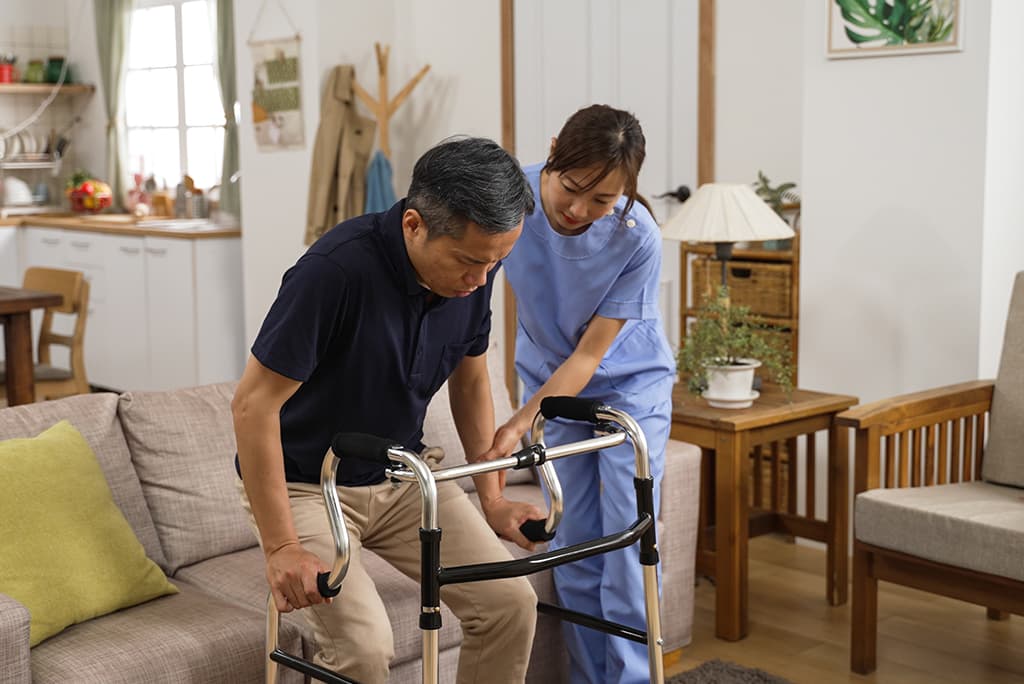
We are a registered NDIS provider supporting stroke survivors across Melbourne and Sydney with a comprehensive range of funded services.
- Personal care & daily living support
- Community access & social participation
- Allied health — physio, OT, speech pathology
- Support coordination & plan navigation
- Short-term accommodation & respite
- Bilingual English & Vietnamese support
Support Resources
Organisations That Can Help
Navigating the NDIS can feel overwhelming during stroke recovery. These organisations provide guidance, advocacy, and practical support.
Stroke Foundation — StrokeLine
EnableMe community, clinical guidelines, and support planning advice.
1800 787 653
NDIS Quality & Safeguards Commission
For concerns about provider conduct or service quality.
1800 035 544
Disability Advocacy Network Australia (DANA)
Find a local disability advocate to assist with applications or reviews.
dana.org.au
My Aged Care
For those aged 65+ who are not eligible for the NDIS but can access government-funded supports.
1800 200 422
Carer Gateway
Support services for family members and carers of stroke survivors.
1800 422 737