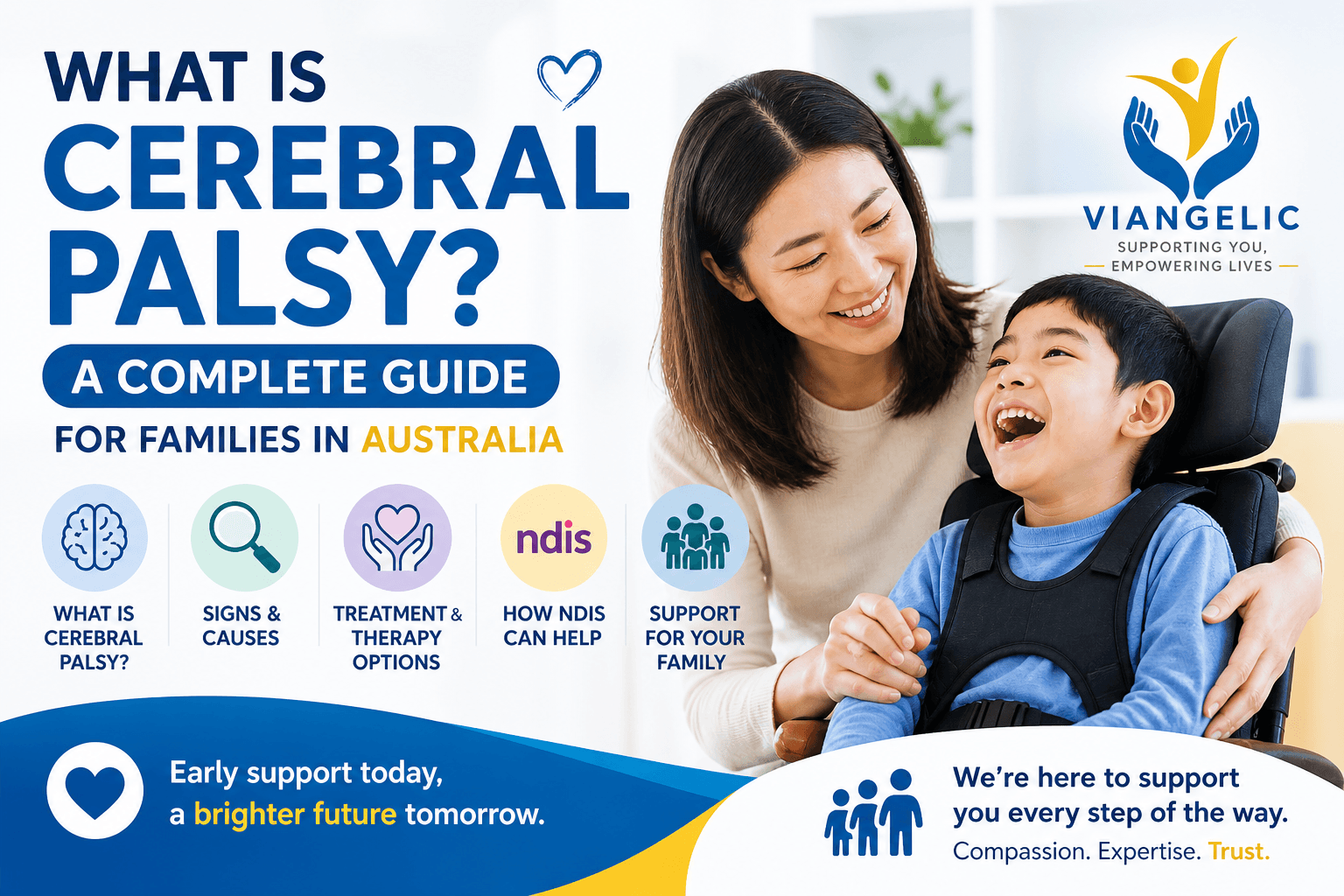
What Is Cerebral Palsy?
Cerebral palsy (CP) is the most common physical disability in childhood. It is an umbrella term describing a group of permanent, non-progressive neurological conditions that affect movement, posture, and coordination. The word cerebral refers to the brain, and palsy refers to weakness or problems with using the muscles.
CP is caused by damage to — or abnormal development of — the parts of the brain that control movement. This damage occurs before, during, or shortly after birth, while the brain is still developing. Importantly, although the brain injury itself does not worsen over time, the effects on the body can change as a child grows.
| Key point: Cerebral palsy is not a disease — it cannot be caught, and it does not progress. Each person's experience is unique, ranging from mild difficulties with coordination to more significant physical and cognitive support needs. |
Many people with CP live full, independent lives, attend mainstream schools, pursue careers, and participate in sport and community life. With the right early intervention and support, outcomes continue to improve significantly.
Prevalence in Australia
Australia has some of the most comprehensive cerebral palsy data in the world, thanks to the Australian Cerebral Palsy Register and organisations such as Cerebral Palsy Alliance.
| 34,000+ Australians living with cerebral palsy | 1 in 500 Live births affected by CP | 700+ New diagnoses each year in Australia | #1 Most common physical disability in childhood |
CP affects people of all backgrounds, genders, and ethnicities equally. It occurs slightly more often in boys than girls, and premature babies have a higher risk — though the majority of children with CP are born at or near full term.
Causes & Risk Factors
In many cases, the exact cause of cerebral palsy cannot be identified. What we do know is that it results from disruption to normal brain development or an injury to the developing brain. These can occur:
Before birth (Prenatal)
- Infections during pregnancy (e.g. rubella, cytomegalovirus, toxoplasmosis)
- Genetic factors or random errors in brain development
- Reduced blood or oxygen supply to the developing brain
- Severe maternal illness or injury
During birth (Perinatal)
- Oxygen deprivation during labour and delivery (birth asphyxia)
- Premature birth (before 37 weeks) — especially before 28 weeks
- Low birth weight
- Multiple births (twins, triplets)
After birth (Postnatal)
- Meningitis or encephalitis in early infancy
- Severe head injury
- Stroke in the newborn period
| Important: Having one or more risk factors does not mean a child will develop CP. Many pregnancies with risk factors result in healthy babies, and many children with CP have no identifiable risk factors at all. |
Types of Cerebral Palsy
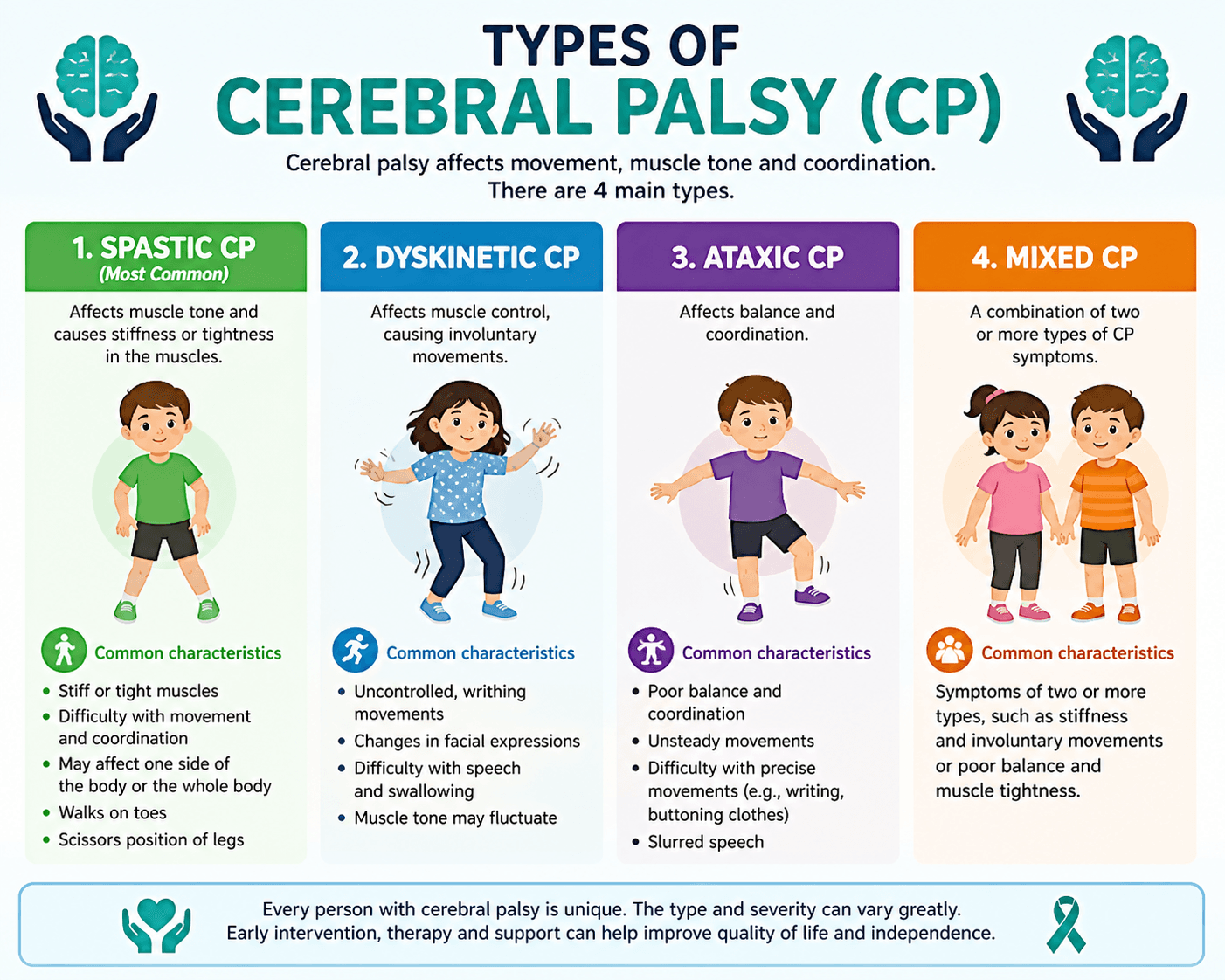
CP is classified by the type of movement impairment and by the parts of the body affected. Understanding the type can help guide therapy and support planning.
| 🔵Spastic CP - The most common type (~80%). Muscles are stiff and tight, making movement difficult and jerky. Can be hemiplegia, diplegia, or quadriplegia depending on which limbs are affected. |
| 🟡 Dyskinetic CP - Involves involuntary, uncontrolled movements. Includes athetoid (slow, writhing) and choreoathetoid (quick, jerky) subtypes. Affects the whole body. |
| 🟢 Ataxic CP - Least common. Affects balance and coordination, making movements appear shaky or unsteady. Walking with a wide-based gait is typical. |
| 🟠 Mixed CP - Features of more than one type, most often spastic and dyskinetic together. Reflects damage to multiple areas of the brain. |
Clinicians also describe CP by topography — which limbs are involved: hemiplegia (one side), diplegia (mainly legs), or quadriplegia (all four limbs).
Signs & Symptoms
Signs of CP vary enormously depending on the type and severity, and they may become more apparent as a baby grows and misses developmental milestones.
In babies (0–12 months)
- Unusual muscle tone — too floppy (hypotonia) or too stiff (hypertonia)
- Delay in reaching motor milestones (rolling, sitting, crawling)
- Favours one hand consistently before 12 months
- Arching the back and neck when crying, as if pushing away
- Feeding or swallowing difficulties
In toddlers & older children
- Delayed walking, or walking on tiptoes
- Scissor gait (knees crossing when walking)
- Difficulty with fine motor tasks (writing, using cutlery)
- Problems with speech and language development
- Involuntary movements or tremors
| Associated conditions: Many people with CP also live with co-occurring conditions including epilepsy (seizures), intellectual disability, vision or hearing impairments, pain, bladder and bowel difficulties, and mental health conditions. Support needs are highly individual. |
Getting a Diagnosis in Australia
There is no single test for cerebral palsy. Diagnosis is based on a clinical assessment of movement, development, muscle tone, and reflexes, combined with imaging and history.
Diagnostic tools used in Australia
- Brain MRI — reveals structural brain differences in ~85% of children with CP
- Cranial ultrasound — commonly used for premature newborns
- General Movements Assessment (GMA) — a validated early detection tool used from birth to ~5 months
- Hammersmith Infant Neurological Examination (HINE) — assesses neurological function in infants
- Developmental assessment tools — to evaluate motor milestones and function
Australia is a world leader in early diagnosis. Through programs like CP-Check and advances in GMA, some babies can now receive a reliable diagnosis as early as 3–5 months of age — enabling earlier access to therapy and better outcomes.
| If you are concerned about your child's development, speak to your GP, paediatrician, or maternal and child health nurse as soon as possible. Early referral makes a significant difference. Trust your instincts — parents often notice something is different first. |
Treatment & Therapies
There is no cure for cerebral palsy, but a wide range of evidence-based interventions can significantly improve function, independence, and quality of life. Treatment is always tailored to the individual child.
Allied Health Therapies
- Physiotherapy (PT) — strengthens muscles, improves movement, mobility and balance
- Occupational therapy (OT) — builds fine motor skills, independence in daily tasks, assistive technology
- Speech-language pathology — supports communication, feeding, and swallowing
- Orthoptics — addresses vision problems common in CP
- Hydrotherapy — water-based therapy to improve strength and reduce spasticity pain
Medical & Surgical Interventions
- Botulinum toxin (Botox) injections — temporarily reduces spasticity in specific muscles
- Oral medications — e.g. Baclofen to reduce muscle stiffness
- Intrathecal Baclofen pump — delivers medication directly to the spinal fluid for severe spasticity
- Selective dorsal rhizotomy (SDR) — surgical procedure that can permanently reduce spasticity
- Orthopaedic surgery — corrects bone and muscle deformities to improve posture and gait
Assistive Technology & Equipment
Assistive technology plays a crucial role for many people with CP. This can include communication devices (AAC), powered wheelchairs, standing frames, orthotics (splints and braces), adapted keyboards, and environmental controls. Funding through the NDIS (see below) can assist with costs.
NDIS & Support Services
The National Disability Insurance Scheme (NDIS)
The NDIS is Australia's landmark funding system for people with permanent and significant disabilities. Most Australians with cerebral palsy are eligible for NDIS funding from early childhood.
NDIS funding can cover:
- Early childhood intervention and therapy (Physiotherapy, OT, Speech)
- Assistive technology (wheelchairs, communication devices, orthotics)
- Personal care and support workers
- Home modifications
- Community access and social participation
- Supported accommodation and respite care
- Plan management and support coordination
Early Childhood Early Intervention (ECEI)
Children under 9 with developmental concerns can access supports through the NDIS Early Childhood Approach, often without a formal diagnosis. This makes it easier for families to get help quickly while awaiting assessment.
How to Apply
- Contact the NDIS on 1800 800 110 or visit ndis.gov.au
- Gather supporting reports from your child's GP, paediatrician, or therapists
- Submit an access request — a Local Area Coordinator (LAC) will guide you through the planning process
- Seek help from organisations like Cerebral Palsy Alliance, who offer NDIS support navigation
Education & Schooling
Children with cerebral palsy have the right to attend their local school and access quality education. All Australian states and territories have legislation requiring schools to provide reasonable adjustments for students with disability.
Types of educational settings
- Mainstream school with support — most common and recommended where possible; teacher aides, adjusted curriculum, assistive technology
- Support or resource units — within mainstream schools for students with higher support needs
- Special schools — for students who require intensive, specialised support
Your child's rights
Under the Disability Discrimination Act 1992 and the Disability Standards for Education 2005, schools must consult with families, provide reasonable adjustments, and ensure participation in education on the same basis as other students. If you face barriers, the Australian Human Rights Commission can provide guidance.
| Tip for families: Connect with your school's Student Support Group (SSG) as early as possible. Bringing therapy reports and working collaboratively with teachers ensures your child's plan is both realistic and ambitious. |
Key Australian Resources
You are not alone. Australia has a strong network of organisations dedicated to supporting people with CP and their families.
| 🤝Cerebral Palsy Alliance - Australia's largest CP organisation. Offers therapy, research, NDIS support, equipment, and community programs nationwide. cpalliance.com.au |
| 🏛 NDIS — National Disability Insurance Scheme - Funding and planning for disability supports. 1800 800 110 · ndis.gov.au |
| 🔬 Cerebral Palsy Research Australia - Funds and coordinates world-class CP research in Australia. cpresearch.com.au |
| 👨👩👧 Raising Children Network - Australian-developed, evidence-based parenting resource with extensive CP guides. raisingchildren.net.au |
| 📞 Carer Gateway - Free services and support for Australian carers, including counselling, peer support, and practical help. carergateway.gov.au · 1800 422 737 |
| 🎓 Australian Human Rights Commission - Information on disability rights in education and the community. humanrights.gov.au |
| 🏥 State Children's Hospitals - Each state has specialist CP clinics — ask your paediatrician for a referral to your nearest multidisciplinary team (e.g. Royal Children's Hospital Melbourne, Sydney Children's Hospitals Network). |
💡Every journey is different — and you don't walk it alone.
A cerebral palsy diagnosis can feel overwhelming at first. But with the right support, therapies, and community around you, children with CP can — and do — thrive. Start by speaking to your GP or paediatrician, connect with Cerebral Palsy Alliance, and explore what the NDIS can do for your family.
📞 Get Support Today
If your family is navigating cerebral palsy and NDIS, we are here to help.
👉 Contact Viangelic today:
📞 Phone: 0483 223 662
📧 Email: info@viangelic.com
🌐 Website: viangelic.com
Need NDIS Support?
Viangelic is a registered NDIS provider helping people across Melbourne and Sydney — including Vietnamese-speaking participants.